
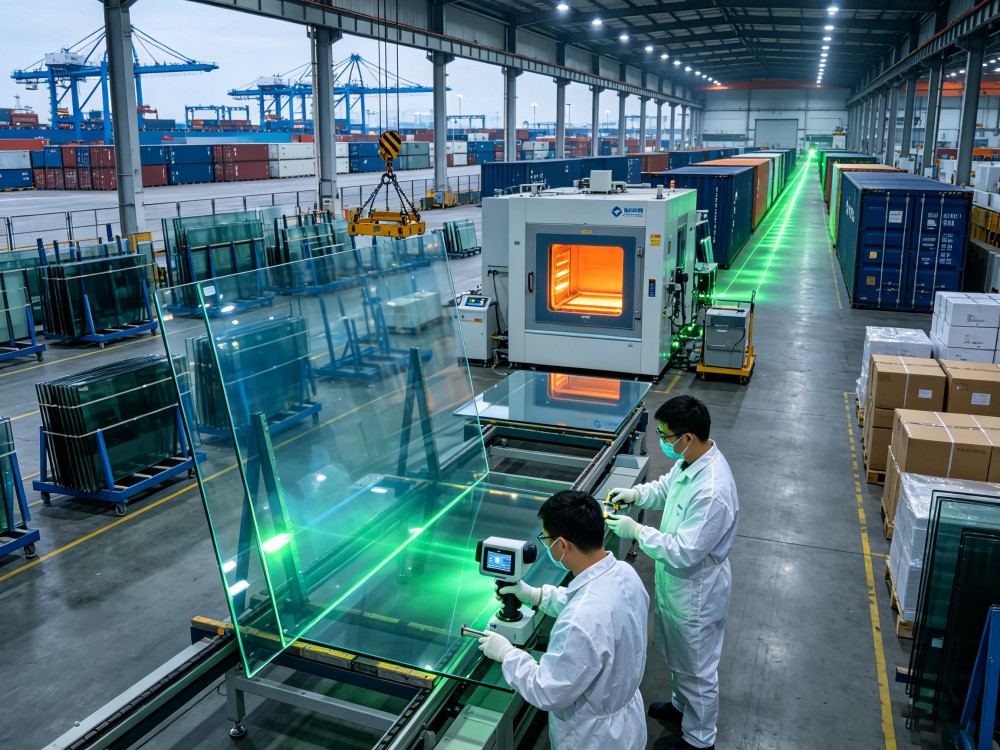
Exporting appliance glass from Shenzhen demands compliance with ISO 9001, CE, RoHS, and multiple national standards. Learn how closed-loop inspection and third-party testing ensure your glass panels clear customs and satisfy global buyers. Request your compliance documentation package today.
The Global Quality Landscape for Appliance Glass
Selling glass panels to international appliance manufacturers isn't like selling into domestic markets. Each destination country maintains its own safety standards, testing requirements, and certification regimes. A panel that passes Chinese GB standards might fail European EN 12150 requirements. A product compliant with US ASTM C1048 could be rejected under Australian AS/NZS 2208.
For suppliers shipping FOB from Shenzhen, this regulatory patchwork creates a formidable barrier. The glass that leaves the factory floor must simultaneously satisfy the quality expectations of buyers in Europe, America, Japan, South Korea, Southeast Asia, and beyond.
The Certification Web: What Your Glass Actually Needs
International compliance isn't optional — it's the price of entry to global markets.
The most widely recognized foundation is ISO 9001 certification for quality management systems. But ISO alone doesn't open doors. Different regions demand specific product certifications:
Europe: CE marking under EN 12150 for tempered safety glass
United States: SGCC certification and ASTM C1048 compliance
Australia/New Zealand: AS/NZS 2208 certification
China: CCC (China Compulsory Certification)
Global chemical compliance: RoHS and REACH for restricted substances
Why Certifications Alone Aren't Enough
Here's a reality that surprises many buyers: having certifications doesn't guarantee that every shipment meets the standards. Certifications demonstrate that a factory's quality system has been audited and found capable. But actual product quality depends on consistent execution.
This is why serious glass processors implement what's known as a closed-loop inspection system — not just for show, but as an operational necessity.
Building a Quality System That Survives Inspection
Quality barriers aren't broken through once — they must be cleared with every container.
IQC: Stopping Problems Before They Start
Incoming Quality Control examines raw glass for thickness variation, flatness, surface defects, and internal stress before processing begins. This might seem obvious, but many factories skip this step to save time. The result? They discover defects only after investing labor in cutting, tempering, and printing — wasting both materials and hours.
IPQC: Real-Time Process Monitoring
In-Process Quality Control monitors every production step as it happens. This isn't random spot-checking — it's systematic verification that cutting dimensions remain within tolerance, tempering stress meets specifications, and screen printing adhesion holds up.
The value of IPQC is that it catches deviations immediately, when corrections are cheap and easy, rather than at final inspection when entire batches might need scrapping.
FQC: The Final Gate
100% Finished Goods Inspection examines every single piece for appearance, dimensional tolerances, tempering stress, screen adhesion, heat resistance, and other critical attributes. For FOB Shenzhen shipments, this final check is the last line of defense against non-conforming products reaching the port.
The Role of Third-Party Testing
Independent verification adds credibility that internal testing alone cannot provide.
Even the most rigorous in-house inspection can be questioned by overseas buyers who haven't visited the factory. Third-party testing from accredited laboratories provides objective evidence that products meet specified standards.
This is particularly valuable for:
New product introductions where buyers want extra assurance
Markets with strict regulatory enforcement
Large-volume contracts where quality disputes could be costly
Documentation: The Unsung Hero of Export Success
FOB Shenzhen shipments require more than good glass — they require good paperwork. Dimensional reports, material certificates, test results, and compliance declarations must accompany every container.
Factories experienced with international exports understand that documentation errors can be as damaging as quality failures. Missing certificates delay customs clearance. Incorrect declarations trigger inspections. Incomplete paperwork results in containers sitting at port while demurrage charges accumulate.
Quality Questions That Separate Serious Suppliers from the Rest
When evaluating a glass supplier for FOB Shenzhen export, ask:
Which certifications do you hold and for which markets? Look for specific standards, not vague claims of "international compliance".
Do you offer third-party testing arrangements? Suppliers who facilitate independent verification demonstrate confidence in their quality systems.
What documentation do you provide with each shipment? The answer should include dimensional reports, material certificates, and compliance declarations.
How do you handle quality disputes? The best suppliers have clear processes for investigating claims and making things right.